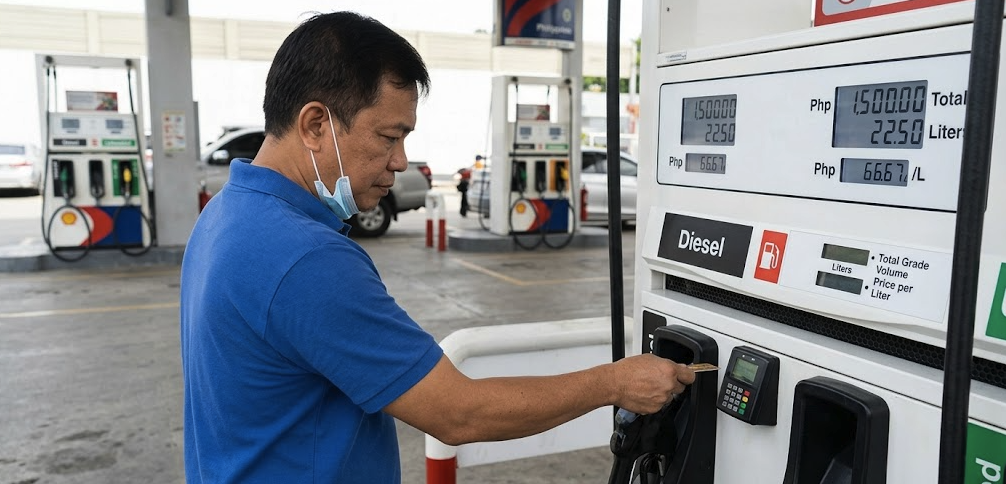
Gas Prices in the Philippines: How VAT and Excise Tax Increase Fuel Costs
Fuel prices are driven by global markets, but Philippine VAT and excise tax add significant costs at the pump and can make consumers pay tax on a tax-inclusive base.
Philippines
How Gasoline is Taxed Twice
Global conflict has again pushed oil markets into turmoil. With war disrupting supply chains, fuel prices have surged sharply. For many Filipinos, every trip to the pump now comes with a wince. In times like these, it is worth asking: what exactly are we paying for every time we gas up?
The answer is not just fuel. It is fuel plus layers of taxation that are easy to miss but significant in impact. Here lies the rub. At the pump, what you usually see is VAT, while the excise tax sits invisibly embedded in the price. It does not appear on the receipt because it is imposed earlier in the supply chain, on refiners or importers. By the time fuel reaches stations, it has already been paid and built into the price.
Thus, the same product effectively ends up taxed twice, and the consumer bears the added cost of a tax on top of another tax. In strict legal terms, however, there is no prohibited double taxation. Excise tax and VAT are imposed at different stages and on different bases, even if they combine into one higher pump price.
Excise tax is a specific tax per unit. Under the TRAIN Law, it is ₱10 per liter for gasoline. VAT, by contrast, is a 12% tax on consumption under the National Internal Revenue Code. It is imposed on the gross selling price, which already includes excise tax and any import duties.
Consider current prices. If gasoline sells at ₱72 per liter:
- ₱10.00 is excise tax
- About ₱7.71 is VAT [72- (72/1.12)]
- About ₱54.29 covers fuel cost, freight, margins, and other charges
If a motorist buys 40 liters, the bill is about ₱2,880:
- Excise tax: ₱400 (40 x10)
- VAT: about ₱309 [2,880 – (2,880/1.12)]
- Other components: about ₱2,171
That means more than ₱700 of that fill-up goes to these two taxes alone. VAT is computed on a base that already includes excise tax. Part of the VAT therefore falls on an amount already representing tax.
Can we remove one or both?
Reports say both the Senate and House are pushing measures to suspend or reduce fuel excise taxes. One version would allow suspension when world oil prices stay above a benchmark, while another would require a presidential declaration of emergency first.
The law sets limits. The executive may suspend scheduled increases in excise tax, but cannot abolish it outright. VAT is imposed by statute and can only be changed by Congress.
Fiscal reality also matters. Government data over the years show excise taxes raise well over a hundred billion pesos annually, while VAT on fuel adds tens of billions more. Removing either would create a major revenue gap. Past price spikes show tax cuts are often proposed but rarely adopted without concern for fiscal stability.
So what can government do?
A state of emergency allows the President to mobilize agencies and expand targeted assistance, but it does not allow suspension of VAT. Government can increase subsidies for transport and agriculture, ensure supply, and pause excise adjustments when allowed. These measures cannot eliminate high prices but can soften the impact.
Other countries have cut fuel taxes, subsidized prices, or imposed controls. These provide immediate relief but are costly and hard to sustain. Wealthier economies can absorb them more easily. The Philippines needs to exercise greater caution.
A more workable approach is a mix of temporary excise relief, targeted subsidies, and better supply logistics. If high prices persist or worsen into shortages, Congress may need to revisit VAT on fuel, whether through temporary reduction or targeted relief.
Fuel prices are shaped by global forces, but how we tax them is a matter of policy. Understanding that we pay a tax on top of another tax is the first step toward a more informed public conversation.