What You Can and Cannot Do When Taking Photos in Public
Taking photos in public is generally allowed, but the legal risk changes when identifiable people become the focus of the content or are posted in a harmful context.
Philippines
It almost always starts the same way. A quick video while waiting for food. A selfie in a mall. A short clip you plan to post and forget about. Later, when you replay it, you notice faces in the background. People you do not know, just going about their day.
It feels harmless. Most people think of them as part of the setting. Accidental. Just there.
The law does not always treat them that way.
In the Philippines, photos and videos can involve personal data, especially when a person can be identified. That brings even casual content within the reach of the Data Privacy Act of 2012, and in some situations, the Cybercrime Prevention Act of 2012.
The issue is not whether you can take photos in public. You generally can. The real question is what you do with them.
Start with what is allowed.
Taking photos or videos in public spaces is, as a rule, acceptable. Streets, parks, malls, even restaurants are places where people do not expect complete privacy. If someone happens to appear in the background of your shot, that is usually fine, especially if they are not the focus and nothing about the image puts them at risk.
That is the idea behind incidental capture.
They are there, but they are not the subject.
The line starts to move when the focus changes.
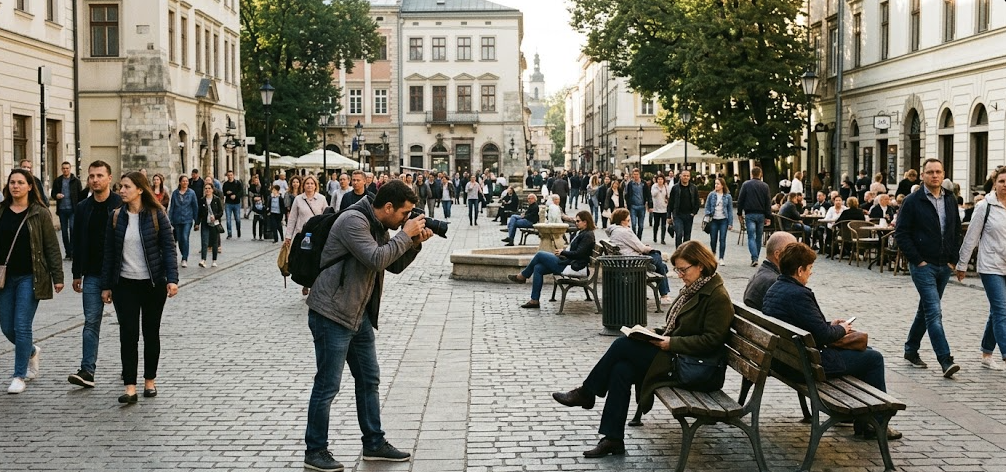
If you intentionally capture someone, zoom in, follow them, or make them the subject of your content without their knowledge, the situation shifts. Once a person becomes identifiable and the image is used in a way that affects them, their rights begin to matter.
Under the Data Privacy Act, individuals have a say in how their personal data is collected and used. An identifiable image can fall within that. Posting it online, especially with captions or context, is no longer just taking a photo. It becomes a form of processing personal data.
That is where consent comes in.
Consent does not always have to be formal or written, but it has to be real. If someone is clearly part of your content, featured in your video, or made the focus of your post, it is safer to ask. A simple question, asked in the moment, can prevent a bigger issue later.
A practical question often comes up at this point. What if someone notices and asks you to stop filming or to delete the photo?
The answer is not always absolute.
If the person is merely part of the background in a public setting, you are not automatically required by law to stop or delete the image. Public spaces allow a degree of incidental capture. Still, once the person objects, the situation changes in a practical sense. Continuing to film or insisting on keeping the image, especially if the person is identifiable and uncomfortable, increases your exposure to a complaint.
If the person is clearly the subject of the photo or video, or if the content can affect them in a meaningful way, their objection carries more weight. At that point, insisting on filming or posting without consent can cross into improper processing of personal data. As a rule of thumb, the more identifiable and central the person is, the stronger their position to demand that you stop or delete.
There are also situations that clearly cross the line.
Recording someone in a vulnerable moment. Filming people in places where they reasonably expect more privacy, even inside public establishments. Posting content that invites ridicule, harassment, or unwanted attention.
These are not just lapses in judgment. They can lead to liability.
Once a photo or video is used to shame, harass, or damage someone’s reputation, the Cybercrime Prevention Act can come into play, particularly in cases involving online harassment or cyber libel. What felt like a casual post can quickly become something else.
Context also matters more than people think.
An image that looks neutral on its own can take on a different meaning depending on how it is presented. A caption, a joke, even the tone of a post can change how it affects the person in the frame. The law does not look only at what was captured. It looks at what was done with it.
So where does that leave you?
You can still take your photos. Record your moments. That is part of everyday life now.
Just pay attention to the point where someone stops being part of the background and becomes part of your content. That is where a little caution goes a long way.
A simple way to think about it is this.
If you would not be comfortable being filmed and posted in the same situation, take a step back.
The people in your frame are not just part of the scenery. They are individuals with their own rights, even if they never intended to be in your shot.